
How to Raise Chickens 101: The Ultimate Guide for Homegrown Eggs
Share
Welcome to the definitive guide on raising backyard chickens: Whether you are aiming to secure a daily supply of fresh eggs, seeking organic pest control for your garden produce, or looking to enter the world of homesteading, raising chickens is a deeply rewarding endeavor.
Modern homesteaders and urban dwellers alike are asking detailed questions about flock management. This ultimate guide answers every single one of them, from sourcing your first chick to safely cleaning your first egg.
1. Preparation and Planning: The Groundwork
Before you order your chicks, you must establish the legal, spatial, and financial parameters of your new flock.
Can I Have Chickens Where I Live?
The absolute first step is checking your municipal zoning laws and Homeowner’s Association (HOA) regulations.
- City chickens are increasingly popular, but urban regulations typically limit flocks to 3–6 hens and strictly ban roosters due to noise ordinances.
- Rural residents usually face fewer restrictions, but property line setbacks for coops still apply.
Where Do Chickens Live?
Chickens require two primary living spaces: a secure indoor shelter for sleeping and laying, and a safe outdoor area for foraging.
- Chickens in coop: The primary structure must be draft-free, well-ventilated, and heavily fortified against predators.
Caveat: While the primary structure must be draft-free at the roosting level, a classic beginner mistake is sealing a coop up too tightly. Chickens expel moisture and ammonia when they breathe and drop manure. Without high-up ventilation (vents placed well above the birds' heads), that moisture settles on their combs in the winter and causes frostbite, and trapped ammonia can damage their respiratory systems.
- Indoor chicken coop: While some keepers use indoor brooders for chicks or keep micro-breeds inside temporarily, adult chickens generate significant dust and dander. Long-term, they must live outdoors.
Sizing and Spacing Your Flock
How many chickens should I get?
Chickens are flock animals with a distinct social hierarchy, so you should start with a minimum of 3 to 5 birds. When planning their space, it helps to look at both commercial standards and backyard best practices. True commercial ‘pasture-raised’ standards require 108 square feet per bird, equating to about 400 birds per acre (with some organic models pushing up to 1,000 birds per acre with rotational grazing). However, for a backyard setup, you should calculate based on raw square footage: aim for a minimum of 4 square feet per bird inside the coop and at least 10 square feet per bird in the outdoor run.
Budgeting: How Much is a Hen?
The initial cost of poultry depends on age, breed, and sourcing. Here’s how they differ:
- Day-old chicks range from $3 to $10 each.
- Started pullets (young females ready to lay) range from $20 to $50.
- Occasionally, you can find a free chicken through local farm animal rescues or neighbors downsizing their flocks.
2. Selecting Your Breeds
Not all chickens serve the same purpose. Your choice depends on whether you want high egg production, meat, or hardy pets.
What Does a Chicken Look Like?
Chicken anatomy varies dramatically across breeds. From the sleek, aerodynamic frames of Mediterranean layers to the heavy, fluffy bodies of English breeds, there is a bird for every aesthetic preference and climate.
Comparing Top Chicken Breeds
|
Breed |
Primary Purpose |
Egg Color |
Temperament |
Climate Tolerance |
|
Australorp |
Eggs / Meat |
Brown |
Docile, Friendly |
Cold & Heat Hardy |
|
Rhode Island Red |
Eggs |
Brown |
Active, Independent |
Very Cold Hardy |
|
White Leghorn |
Eggs |
White |
Flighty, Active |
Heat Hardy |
|
Orpington |
Eggs / Meat |
Brown |
Very Docile |
Cold Hardy |
|
Plymouth Rock |
Eggs / Meat |
Brown |
Calm, Friendly |
Cold Hardy |
Deep Dive into Breed Categories
- Best beginner chickens to raise: Australorps, Orpingtons, and Plymouth Rocks are highly recommended for beginners due to their robust health and friendly dispositions.
- Dual purpose chickens: Breeds like the Sussex and Wyandotte are heavy enough for meat production but still lay a highly respectable 200+ eggs per year.
- What chickens lay white eggs? If you are looking for classic white eggs, Mediterranean breeds are your target. You will often see Leghorns chickens for sale at commercial hatcheries because they are the undisputed champions of white egg production.
- How long do Rhode Island Reds lay eggs? A staple in backyard flocks, these birds lay prolifically for their first 2 to 3 years. After that, production slowly declines, though a healthy hen can live and lay sporadically for up to 8 years.
- Chicken colors: The plumage options are staggering, from the iridescent green-black of the Jersey Giant to the intricate lacing of the Silver Laced Wyandotte.
3. Anatomy, Life Cycle, and Breeding
Understanding how your birds grow is crucial for their long-term health and productivity.
The Life Cycle for Chicken
The journey from egg to adult is rapid.
- Incubation: Eggs hatch after 21 days.
- Chicks (0-4 weeks): Require a temperature-controlled brooder starting at 95°F, dropping 5 degrees each week.
- Pullets/Cockerels (5-17 weeks): The "teenage" phase where they move to the outdoor coop.
- Point of Lay (18-22 weeks): Hens begin laying their first eggs.
Growth and Identification
- If you look at 1 month old chicken pictures, you will notice the birds are in an awkward transitional phase, rapidly losing their baby down and growing their first adult feathers.
- How to tell how old a chicken is: Exact age is difficult to pinpoint in adults. However, young pullets have vibrant, smooth red combs and smooth leg scales. Older hens naturally develop thicker, rougher leg scales as they age. Additionally, highly productive hens will show faded, 'bleached' pigmentation in their beaks and feet, a result of their bodies diverting dietary pigments away from their skin and into their egg yolks.
- Chickens breeding: To hatch your own chicks, you must keep a rooster to fertilize the eggs, and either use a mechanical incubator or rely on a "broody" hen who instinctively decides to sit on a clutch of eggs.
Housing Construction: Runs, Predators, and Ventilation (Adding Crucial Coop Mechanics)
The Run and Pasture Setup
Providing access to grass and bugs is essential for healthy, deep-orange egg yolks, but security must be your top priority. The run should ideally be enclosed with heavy-duty half-inch metal hardware cloth, not standard chicken wire. Chicken wire is thin and loosely woven, meaning determined predators like raccoons can unweave the wire, snap it, or reach directly through the hexagonal gaps.
When drafting your chicken run blueprints, two specific predator defenses are highly recommended:
-
Digging Predator Defense: Dig a trench around the perimeter and bury the hardware cloth at least 12 inches deep to prevent foxes and dogs from tunneling under.
- Aerial Predator Defense: Hawks and owls are among the most common threats to backyard flocks. Ideally, your run should have a solid roof or be tightly covered with heavy-duty avian netting.
Advanced Housing Solutions
-
Chicken walkway / tunnels: Also known as "chunnels," these are enclosed wire tunnels that allow your birds to safely navigate from the coop to different designated grazing areas in your yard without exposing them to hawks or aerial predators.
- Portable chicken run & Meat chicken tractor: If you’ve got the land for it, a floorless, mobile coop (tractor) is ideal for pasture-raising. Moving it daily prevents the birds from decimating a single patch of grass while evenly distributing their nutrient-rich manure.
Landscaping and Aesthetics
-
Garden for chickens: Chickens are exceptional at turning over compost and eating garden pests, but they will also consume your prize-winning vegetables. Use temporary fencing to keep them out of active garden beds, or let them in post-harvest to clear the debris.
Outdoor chicken decor: Personalize your setup! Many keepers add custom wooden signs, decorative nesting boxes, and brightly painted trim to make the coop a beautiful landscape feature.
5. Health, Molting, and Parasite Control
Proactive health management is the key to a thriving flock. You must learn to read your birds' physical cues.
Recognizing Illness and Pests
A healthy chicken is alert, active, and vocal. Signs of illness include lethargy, hiding in corners, pale or purple combs, respiratory wheezing, and a sudden drop in egg production.
If you discover lice or mites on your birds, you must treat the flock and the coop immediately with poultry dust or permethrin. While poultry parasites are species-specific and cannot complete their life cycle on human hosts, you should still wear long sleeves and gloves when treating an infestation. Bird mites will bite humans, and handling an infested coop without protection can lead to bird mite dermatitis, an irritating and itchy temporary rash.
Understanding the Molt
- Chicken losing feathers: If your coop suddenly looks like a pillow exploded, your birds are likely going through their annual molt, not a disease or bullying incident.
- Chicken molting: Beginning around 18 months of age, chickens shed their old plumage and grow new feathers every autumn. Egg laying will completely stop during this 4-to-8-week period as their bodies divert all protein and energy to feather production.
- Chicken molting in winter: Occasionally, a bird will molt late in the season. If you have a bald chicken in freezing temperatures, do not put a sweater on it, this damages the sensitive new pinfeathers. Instead, increase their dietary protein (using mealworms or scrambled eggs) to accelerate feather growth and ensure their coop is draft-free.
6. Enrichment and Egg Care
Boredom leads to behavioral issues like feather-pecking. Mental stimulation and proper hygiene practices round out the complete chicken-keeping experience.
Keeping the Flock Entertained
- Games for chickens & Toys for hens: Hang a head of cabbage from a string (a chicken piñata) or provide a flock block for them to peck at.
- Chickens love pumpkin, give them some as a treat.
- Dust bath chicken: Chickens require dry dirt or sand to bathe. They dig shallow trenches and throw the dust into their feathers, which absorbs excess oils and smothers external parasites. Always ensure a dry dust-bathing spot is available in the run.
Egg Collection and Care: Best Practices for Freshness
The ultimate reward for all this hard work is the daily egg collection. Clean nesting boxes are your first defense against dirty eggs, but mud and manure happen.
When it comes to handling your harvest, understanding the egg's natural anatomy is vital. Every egg is laid with a bloom, an invisible, natural antibacterial coating that seals the shell's pores and prevents oxygen and bacteria from getting inside. Because of this protective layer, you technically can leave unwashed eggs on your countertop for a few weeks.
Why We Recommend Washing and Refrigerating
While the countertop method is popular in some homesteading circles, we do not recommend it as a best practice. At room temperature, the natural bloom eventually deteriorates. Once this coating degrades, the egg's porous shell is left vulnerable, allowing oxygen and potential bacteria to seep inside.
To best preserve your harvest, maintain peak freshness, and ensure the highest level of food safety for your family, our recommended best practice is to collect, safely wash, and immediately refrigerate your eggs.
Because you will be washing your eggs before storing them in the fridge, you must use a cleaning method that safely removes coop grime without compromising the shell beneath it.
The Goodegg Wash Routine:
Spotless or Dusty Eggs: Even if they look perfectly clean, a quick, gentle wet wash removes unseen coop dust and prepares them for safe, long-term refrigerator storage.
Muddy or Manure-Coated Eggs: These require a more thorough wash to remove dangerous biological matter before they go anywhere near your kitchen fridge.
How to Safely Wash Eggs (We Recommend It): Whether you are finally cooking the spotless eggs from your countertop or dealing with muddy eggs straight from the coop, wet washing is a necessary step. However, it is crucial to understand that once an egg is wet-washed, it must either be cooked immediately or stored in the refrigerator, as the protective bloom will be removed.
When you do wash, water temperature is critical. Washing eggs with cold water causes the inner contents to contract, creating a vacuum that can actually pull bacteria through the porous shell. Always wash eggs under running water that is at least 10 degrees warmer than the egg itself.
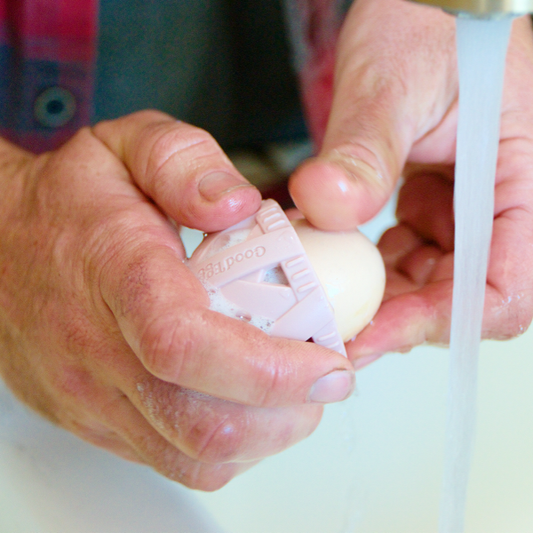
Your goal during a wash is to thoroughly lift away biological matter without damaging the shell beneath it. Standard kitchen sponges harbor old bacteria, and abrasive scrub pads create micro-scratches on the shell where new bacteria can hide. The safest mechanical method is utilizing flexible, food-grade silicone engineered to clean heavily without scratching the shell itself.
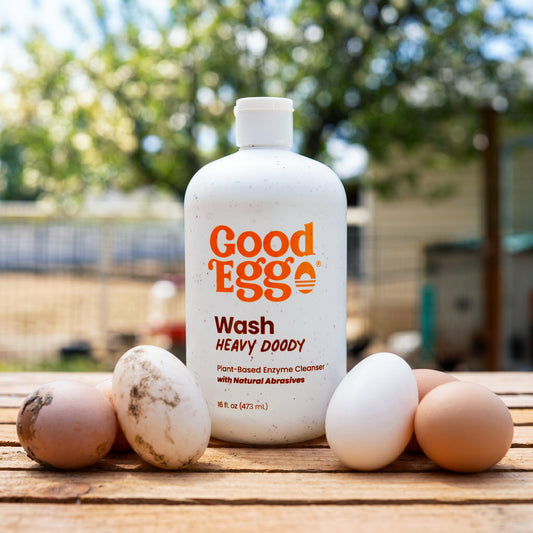
This is the exact science behind our patented Egg Cleaning Brush, the Goodegg Brush. Designed with hundreds of flexible silicone nubs, it contours to the egg to safely and thoroughly lift coop grime. For stubborn, dried-on messes, pair it with the Goodegg Wash, an enzymatic cleanser that naturally breaks down feces and mud without the harsh chemicals found in standard soaps. Whether you are prepping eggs for the frying pan or cleaning them for the fridge, this system ensures your harvest is pristine and safe for your family.
Raising chickens provides a direct connection to your food and endless backyard entertainment. By utilizing these comprehensive strategies, from drafting your run blueprints to upgrading your egg-washing station, you are fully equipped to build a healthy, happy, and highly productive flock.